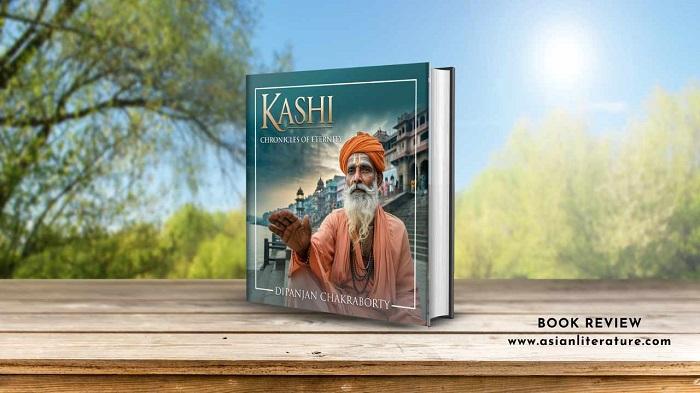
Book Review Kashi Chronicles of Eternity
Kashi: Chronicles of Eternity is a book that does not simply present a city—it unveils a lifetime of emotion, memory, and introspection woven into the ancient fabric of Varanasi. Dipanjan Chakraborty’s work moves far beyond the boundaries of travel photography or cultural documentation. Instead, it becomes a deeply personal meditation on a place that has shaped his inner world for more than three decades. The result is a book that feels alive, breathing with the quiet intensity of a city that has witnessed countless lives, stories, and transformations.
What distinguishes this book from others on Kashi is its refusal to dramatize or romanticize the city. Chakraborty approaches it with honesty, humility, and an extraordinary sensitivity. He is not chasing dramatic sunsets, crowded ghats, or grand rituals. He seeks something subtler—moments where the human spirit and the spirit of the city intersect. His photographs capture these intersections with a gentle, contemplative gaze, reminding us that the essence of a place often lives in its smallest gestures.
Each photograph feels like an invitation to pause. Whether it is the soft glow of early morning light on a stone step, the silhouette of a solitary boatman drifting across calm waters, or the thoughtful expression of a passerby, the images evoke a quiet emotional resonance. They do not overwhelm the viewer; they guide them into stillness. This quality reflects the author’s own relationship with Kashi—a relationship rooted not in spectacle but in presence.
The accompanying text elevates the visual experience into something much deeper. Chakraborty writes not as a narrator, but as a seeker in conversation with the city. His reflections reveal an ongoing dialogue with time, memory, and the self. He speaks of longing, of searching, of moments that slip away, and of unexpected instances when the city seems to respond with silence or grace. His words carry a kind of vulnerability that is rare in books of this nature. They remind the reader that this project is not just a creative effort—it is an emotional offering.
One of the most striking elements of the book is its portrayal of Kashi as a living presence rather than a geographical location. The city becomes a character—ancient yet ever-renewing, complex yet deeply comforting. Chakraborty understands that Kashi’s identity lies not just in its rituals or architecture, but in its ability to hold countless contradictions within itself. The photographs reflect this understanding by capturing both stillness and movement, solitude and crowdedness, fading traditions and enduring rituals. Each frame becomes a piece of a larger mosaic that reveals the city’s eternal nature.
Another remarkable aspect is the pacing of the narrative. The book unfolds slowly, intentionally, almost meditatively. There is no rush to move from one image to the next. Instead, each page seems to ask the reader to linger, to absorb, and to reflect. This mirrors the rhythm of Kashi itself—a city that demands patience and attunement, a place that reveals itself only to those willing to slow down and listen. Chakraborty’s choice to let silence play such a significant role in the storytelling gives the book a rare, immersive quality.
The emotional depth of the photographs stands out as well. The people he captures are not posed, nor are they framed as anonymous figures in a documentary. They appear as individuals experiencing their own moments of devotion, contemplation, fatigue, or peace. The author’s compassion toward his subjects is evident in the way he photographs them—with respect, with curiosity, and without intrusion. In these portraits, the book finds its heartbeat. They anchor the narrative and remind us that Kashi is not just a place of spiritual symbolism—it is a home to real people living deeply human lives.
The book also excels in its ability to evoke memory. Even if the reader has never visited Kashi, the images stir a sense of familiarity. The textures, the light, the passing expressions—everything feels strangely known, as if the city carries something universal within its ancient walls. For those who have visited, the book becomes a silent companion that reawakens feelings they may have forgotten. It captures not just what Kashi looks like, but how it feels to stand in its presence: slightly overwhelmed, strangely comforted, and subtly transformed.
What makes Kashi: Chronicles of Eternity particularly powerful is its emotional sincerity. The author never tries to impress the reader; he simply opens a window into his inner world. Through that window, we witness a man searching for meaning, connection, and perhaps a form of peace that only a place like Kashi can offer. This honesty gives the book a depth that goes far beyond aesthetics. It becomes a meditative space, one that encourages the reader to reflect on their own inner journeys.
By the final pages, a profound sense of connection lingers. The book leaves the reader with a feeling of quiet expansion—like the soft echo of a temple bell long after the sound has faded. It invites introspection, not instruction; emotion, not analysis. In this way, Chakraborty has created something truly rare: a work that is both deeply personal and universally resonant.
Kashi: Chronicles of Eternity is more than a photographic project. It is a testament to devotion, a tribute to memory, and a celebration of the eternal dialogue between a seeker and the sacred. It is a book that stays with you—gently, quietly, but unmistakably—long after the final image has been turned.