Some schools teach lessons. Navodaya teaches life.
Some stories are written with ink.
Some are written with experience.
And some are written straight from the heart.
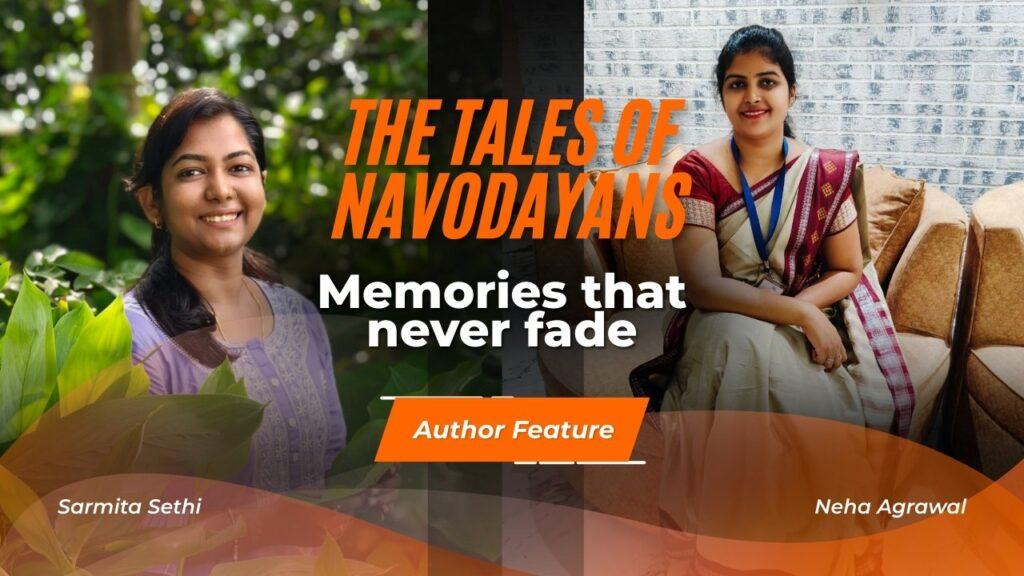
The book Navodayans: Memories that never fade belongs to the third kind. Behind this emotional and nostalgic work are two passionate authors — Sarmita Sethi and Neha Agrawal — educators by profession, storytellers by soul, and proud Navodayans by identity.
This is not just the story of a book.
This is the story of two friends, two educators, and two hearts connected by one emotion — Navodaya.
Where Friendship Met Purpose
Sarmita Sethi and Neha Agrawal did not begin their journey as authors. Their journey began as students — young girls who walked into Jawahar Navodaya Vidyalaya with nervous hearts, hopeful dreams, and unknown futures. Like thousands of Navodayan students across India, they lived the hostel life, learned discipline, made friendships, faced homesickness, celebrated small joys, and slowly grew into confident individuals.
Years passed. Life moved on. Careers were built. Responsibilities increased. But one thing never left them — the memories of Navodaya.
Those corridors, those classrooms, those assemblies, those friends, those teachers — they stayed alive in their hearts.
What started as casual conversations between two friends slowly turned into something deeper. They would often talk about their school days, their hostel life, the discipline, the friendships, the laughter, the tears. They realised that they were not just remembering memories — they were carrying a shared emotion.
And that emotion gave birth to a powerful idea:
“Why not bring these memories to life through a book?”
From Nostalgia to Creation
Writing a book is not easy. It requires time, dedication, honesty, and emotional strength. For Sarmita and Neha, this book was not just a creative project — it was personal.
They were not trying to write fiction.
They were not trying to impress with fancy language.
They were trying to preserve a feeling.
Every chapter of Navodayans feels lived-in because it is lived-in. The stories come from real experiences, real emotions, and real moments. Many parts reflect collective memories that countless Navodayans will instantly relate to.
Late-night hostel whispers.
Fear of the housemaster.
Tears during goodbye.
Excitement of friendships.
Pain of separation.
Joy of belonging.
These are not just scenes. These are memories shared by an entire community.
Educators Who Understand the Power of Stories
Both authors are educators by profession. That plays a big role in how they write and what they choose to write.
Teachers do not just teach subjects.
They observe emotions.
They understand psychology.
They see growth.
They witness transformation.
As educators, Sarmita and Neha understand the journey of students deeply — the fears, the struggles, the silent battles, and the invisible victories. That understanding flows naturally into their writing.
Their book does not lecture.
It does not preach.
It simply understands.
And that is why readers feel safe inside its pages.
Navodaya: Not Just a School, But an Emotion
One of the most powerful beliefs shared by both authors is this:
“Navodaya is not just an institution — it’s an emotion that stays forever.”
This belief is not a slogan. It is reflected throughout the book.
They portray Navodaya as:
- A place that builds confidence
- A system that shapes discipline
- A home that teaches independence
- A family that never truly separates
Through their writing, they honour not just their own experiences but the experiences of thousands of students who passed through the Navodaya system.
The book becomes a tribute — not only to memories but to a legacy.
Writing Style That Feels Like Conversation
One of the most beautiful things about Sarmita and Neha’s writing is its simplicity. They do not try to sound intellectual. They do not hide behind complex words. They write the way real people feel.
Their language is:
- Simple
- Honest
- Emotional
- Relatable
- Warm
Readers often say that the book feels like:
“Listening to an old friend narrate life stories over a cup of tea.”
That is a rare gift.
Two Voices, One Emotion
Although two authors are involved, the book does not feel disconnected. Instead, it feels like two voices singing the same song. Both writers bring their own perspectives, yet the emotional tone remains unified.
This shows deep understanding, strong friendship, and shared vision.
Their collaboration is not just professional. It is emotional. And that emotional harmony is what gives the book its soul.
Why This Book Matters Today
In today’s fast-moving world, where attention spans are short and emotions are often hidden behind screens, books like Navodayans become important.
They remind us:
- Of handwritten letters
- Of waiting for phone calls
- Of friendships without social media
- Of life before smartphones
- Of emotions that were felt deeply, not posted online
The book becomes a bridge between generations. Older readers feel nostalgia. Younger readers learn the value of relationships, discipline, and emotional growth.
Readers’ Emotional Response
Many readers describe similar feelings after reading the book:
- “It felt like my own story.”
- “I cried remembering my hostel days.”
- “I called my school friend after reading this.”
- “It healed something inside me.”
- “It brought my childhood back.”
Such reactions do not come from clever marketing. They come from honest writing.
And that honesty belongs to the authors.
Beyond the Book: A Deeper Purpose
This book is not only about remembering the past. It has a deeper purpose.
It:
- Encourages students living away from home
- Helps parents understand hostel life
- Shows teachers the impact they have
- Preserves institutional memory
- Builds emotional connection within the Navodayan community
In many ways, Sarmita Sethi and Neha Agrawal are not just authors — they are memory keepers.
They are preserving a cultural and emotional heritage.
Women Who Write with Strength and Sensitivity
In a literary world often dominated by loud voices, Sarmita and Neha bring something different: quiet strength and gentle honesty.
Their writing does not shout.
It does not exaggerate.
It does not pretend.
It simply feels.
They represent a powerful group of women writers who write not to impress, but to express. Not to compete, but to connect.
A Book Written with Gratitude
What stands out strongly in their work is gratitude.
Gratitude towards:
- Parents
- Teachers
- Seniors
- Friends
- The institution
- The journey itself
There is no bitterness in the writing. Even painful memories are written with maturity and understanding. That emotional balance shows growth — both as individuals and as writers.
Inspiration for Young Writers
For aspiring writers, Sarmita and Neha’s journey offers an important lesson:
You don’t need extraordinary life to write meaningful stories.
You need honesty.
You need observation.
You need emotion.
You need courage to be vulnerable.
They turned ordinary school life into extraordinary literature simply by telling the truth.
That is powerful.
The Legacy They Are Building
With Navodayans, Sarmita Sethi and Neha Agrawal have created more than a book. They have created:
- A document of shared experience
- A literary tribute to an institution
- A nostalgic archive for future generations
- A voice for countless unspoken emotions
Years from now, when students want to understand what Navodaya life felt like, this book will still speak.
That is legacy.
Final Words
Sarmita Sethi and Neha Agrawal are not just co-authors.
They are co-travellers of memory.
They are co-keepers of emotion.
They are co-voices of a shared experience.
Through Navodayans: Memories that never fade, they have reminded us of something precious:
That some places don’t leave us.
Some people don’t fade.
Some memories stay forever.
And sometimes, when written with honesty and love, those memories become literature.